 PetDoing
Animal welfare · PetDoing Official
Dog & Cat Meat Trade: Yulin, Yanji and Vietnam's Changing Cities
Dated reporting from Yulin, Yanji, Hanoi, Ho Chi Minh City and Hoi An: what is documented, what is changing and how to support animal welfare.
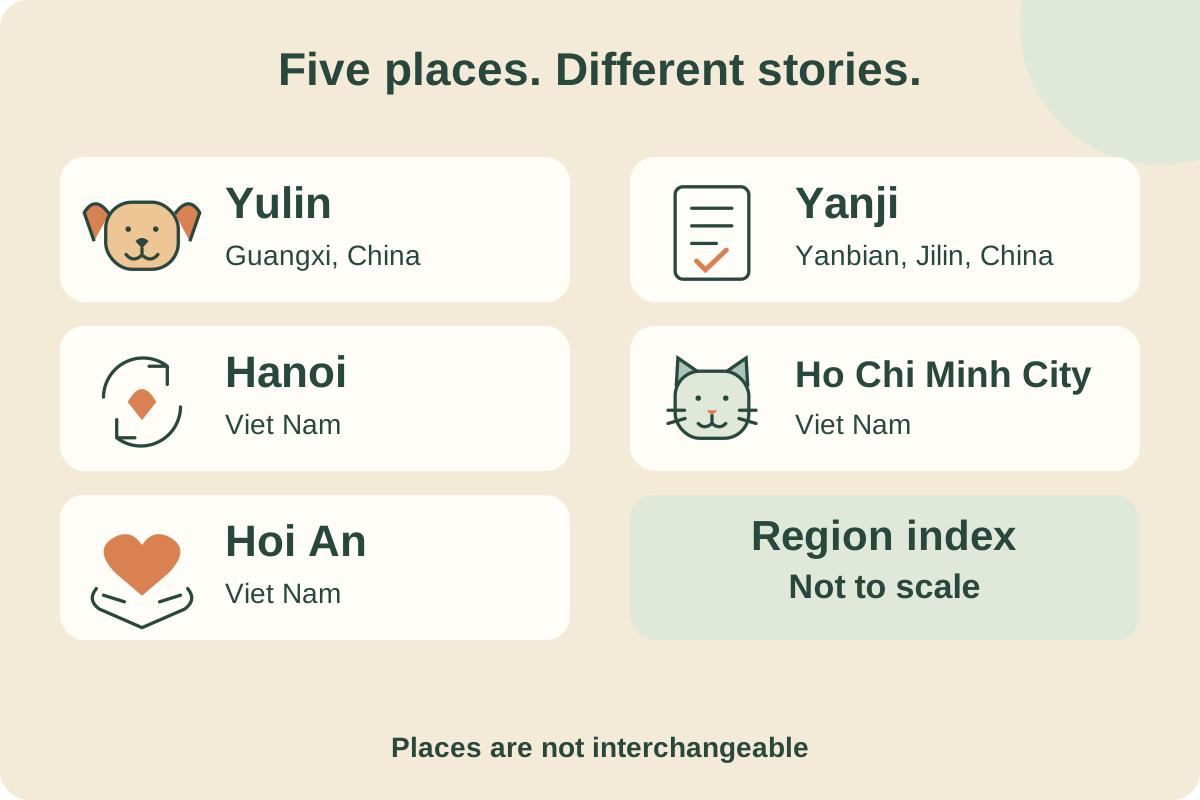
- Follow the dateA historical report is not a current consumption count.
- Follow the placeA facility, ward and city are different boundaries.
- Support better careVerify sources and help without targeting local people.
Dog and cat meat trade raises questions about animal welfare, stolen pets, public health and changing livelihoods. The useful story is specific: who reported an event, which animals were involved and what changed. These cities also include people working to protect animals; a trade does not define every resident.
Sources checked October 11, 2026. Original illustrations explain places and evidence; they are not photographs of a case or rescue. This is dated welfare reporting, not a consumption ranking or a pet-access guide.
Read the map before comparing
Yulin is a city in Guangxi, China. Yanbian is an autonomous prefecture; Yanji is its capital city. Vietnam is a country, so Hanoi, Ho Chi Minh City and Hoi An need separate accounts. Administrative boundaries can change, and a report about a ward does not describe every part of a city.
- Place and date: Keep the report’s original geographic boundary and year.
- Dogs and cats: Evidence about one species does not automatically cover both.
- Scale: A survey answer, an investigation and a policy target measure different things.
Read the original: 2015 · official geography: Yanbian and Yanji
Yulin: reported trade, varied attitudes and one closure
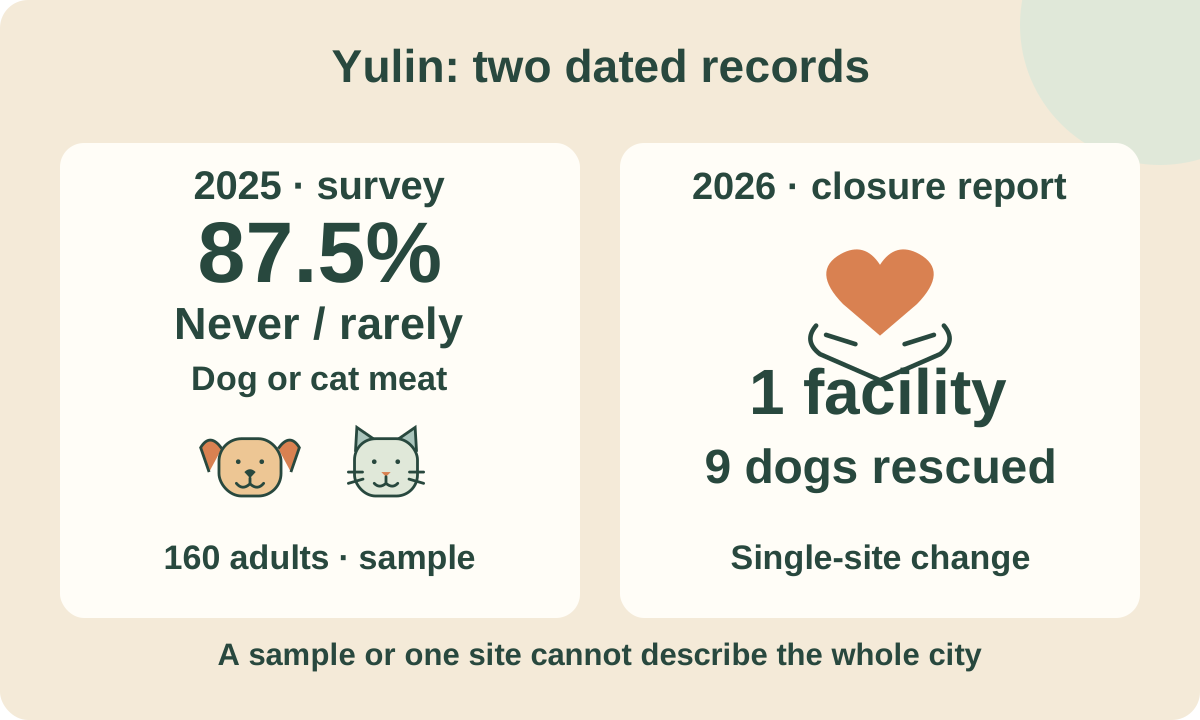
Reuters documented dog-meat trade around the summer solstice in 2016. That is a historical record, rather than a measurement of today’s market.
In 2025, Vshine interviewed 160 adults. Humane World for Animals reported that 87.5% of respondents said they never or rarely ate dog or cat meat. “Rarely” included once or a few times a year. These face-to-face interviews used a non-probability sample, so the result describes the respondents, not 87.5% of the whole city.
In June 2026, Humane World and Vshine reported a closure and livelihood-change agreement with one dog-slaughter facility, where nine dogs were rescued. This offers a concrete example of transition; it does not establish that trade across Yulin has ended.
Read the original: 2016 · Reuters reporting: Yulin dog-meat trade · 2025 · Humane World/Vshine NGO survey: methods and answers · 2026 · Humane World NGO program: one facility closes
Yanji: the evidence is historical and dog-specific
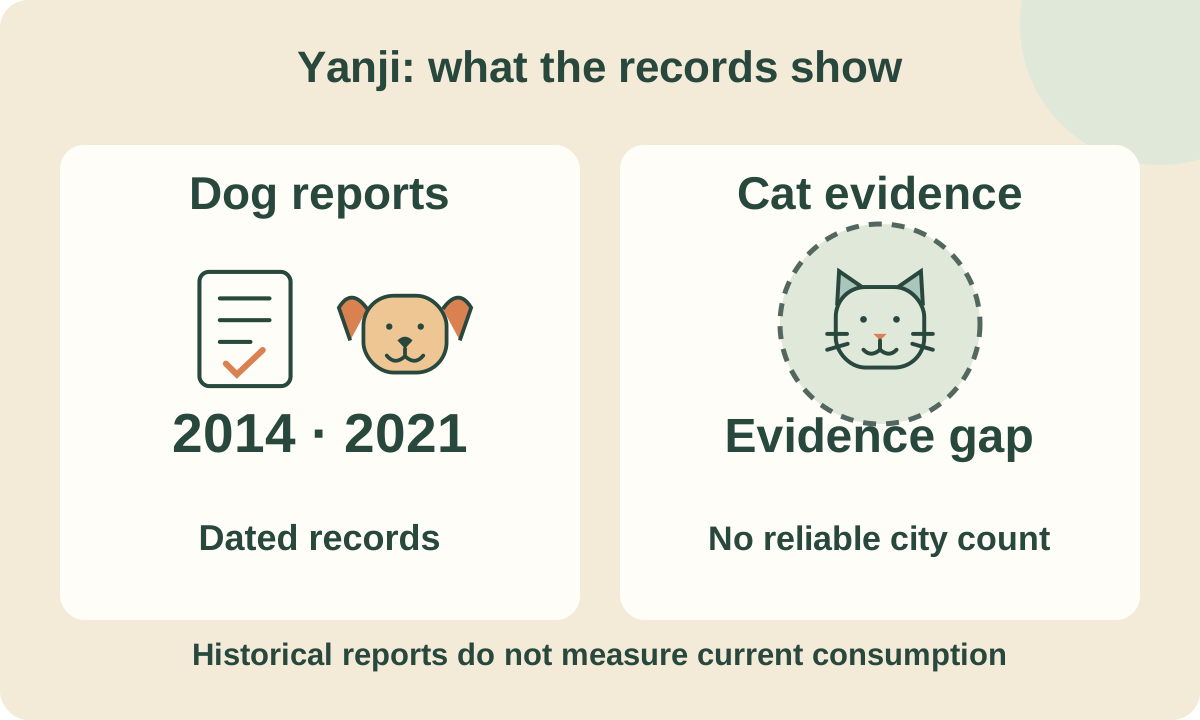
A 2014 CCTV travel-program description mentioned a dog-meat hotpot in Yanji. A 2021 Xinhua food report, republished by Yanji News, also listed dog meat among locally described dishes. It establishes that the food was publicly reported then. It provides no reliable 2026 consumption total, population share or dog-meat ranking.
Our reviewed sources do not establish widespread cat-meat consumption in Yanji or Yanbian. Describing the documented dog trade is more accurate than extending it to cats, every resident or an ethnic community. Contemporary comparable data would be needed to describe its present scale.
Read the original: 2014 · CCTV reporting: historical Yanji dog-meat dish · 2021 · Xinhua reporting, republished by Yanji News
Hanoi: a ward-level transition pilot
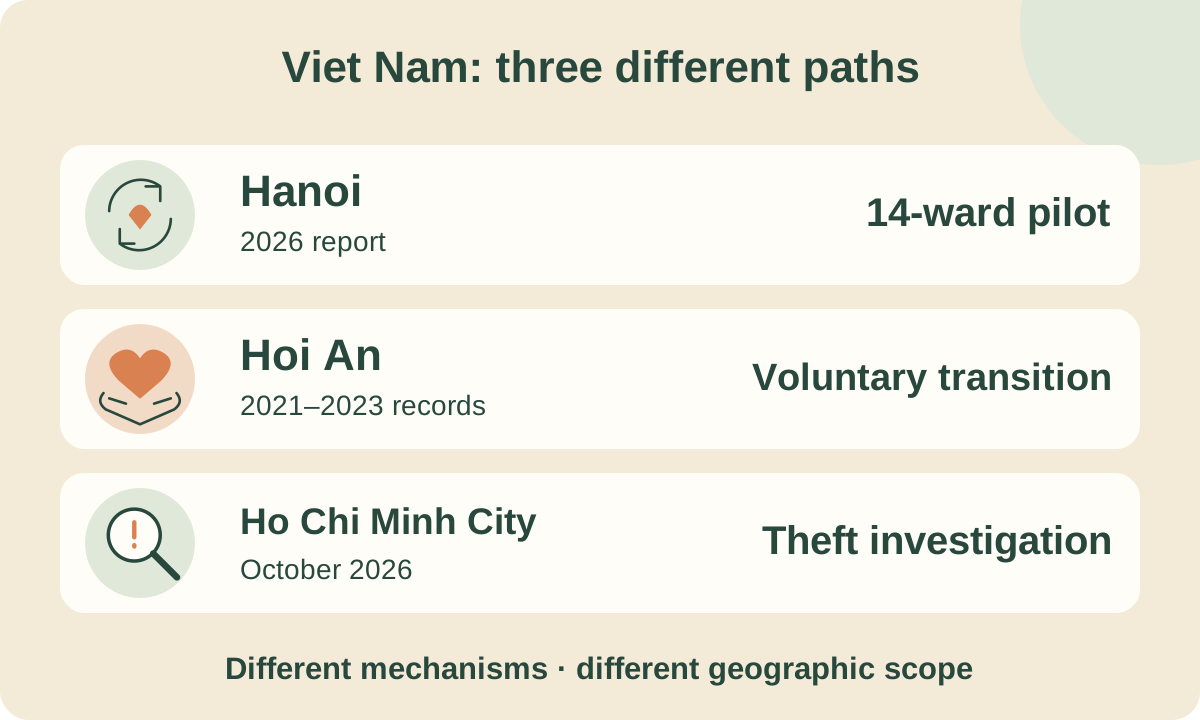
Hanoi’s 2018 government policy combined management, disease prevention and encouragement to give up eating dog and cat meat. It was not a blanket prohibition.
On July 24, 2026, Viet Nam News reported a pilot across 14 wards. According to the project leader, 28 slaughter or trading facilities had stopped operating and 25 had registered for transition. These are reported project results across the pilot, not a citywide count. The reported end of sales in Giang Vo ward is likewise a local outcome, not proof of a Hanoi-wide legal ban.
Read the original: 2018 · Vietnam government reporting: Hanoi management policy · 2026 · Viet Nam News: Hanoi pilot results
Ho Chi Minh City: theft investigation and cooperation talks

On October 6, 2026, AP reported, citing Vietnamese state media, that police were investigating 12 men suspected of stealing and reselling about 2,700 cats. This number belongs to the investigation. It is neither an annual city consumption total nor a finding that the suspects have been convicted.
Separately, the municipal veterinary agency’s January 2026 report described discussions with welfare partners about reducing the trade. It discussed cooperation, resources and approvals; it did not announce a citywide prohibition. Theft enforcement and a proposed welfare program are different developments.
Read the original: 2026 · AP reporting: cat-theft investigation, October 6 · 2026 · municipal veterinary agency: Ho Chi Minh City cooperation
Hoi An: voluntary change, not a verified finish line

In December 2021, FOUR PAWS and Hoi An’s authorities signed an agreement to phase out dog and cat meat trade. Their approach also included animal-care and rabies-prevention work.
A 2023 government report explained that the authorities relied on publicity and persuasion, rather than forcing businesses to change. This makes Hoi An a useful example of voluntary transition. An agreement and its target date are different from a completed outcome: we found no independent 2026 audit establishing that all trade across the area had ended.
Read the original: 2021 · FOUR PAWS NGO partner: Hoi An agreement · 2023 · Vietnam government reporting: voluntary change in Hoi An
Two legal comparisons with different boundaries
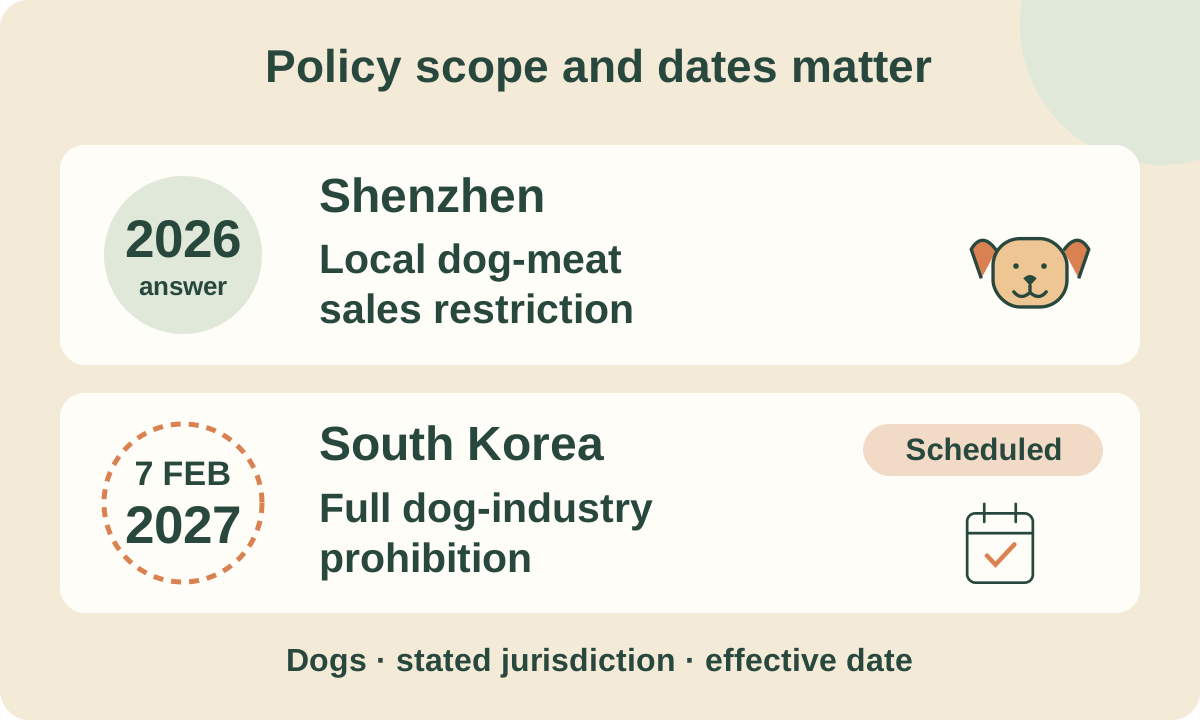
Shenzhen, China: in an August 2026 answer, the city’s market regulator stated that Shenzhen restaurants and meat stalls may not sell dog-meat food. This answer expressly addresses dogs under local rules; it cannot be applied to Yulin, Yanbian or all of China.
South Korea: the 2024 special act concerns breeding, raising, slaughtering, distributing and selling dogs for human consumption. The agriculture ministry states that Article 5’s full prohibition is scheduled for February 7, 2027. Earlier restrictions already address new facilities. This is a dog-specific industry law, not a cat-meat provision or a claim that a diner alone faces its quoted criminal penalties.
Read the original: 2026 · Shenzhen market regulator: local dog-meat restriction · 2024 · Korean statute: dog-meat industry and commencement · 2026 · Korean agriculture ministry: February 2027 start date
Care that helps, and information worth sharing
Keep vaccinations current with your vet, supervise outings and retain identification details and recent pet photos. If an animal goes missing, contact local authorities and established welfare groups through their official channels. Verify an organisation’s identity and its stated work before donating or volunteering.
WHO explains that rabies usually spreads through infected saliva, including bites, scratches or contact with broken skin. Its FAQ distinguishes exposure while handling infected tissues from eating cooked meat, which does not transmit rabies. This distinction is not a general food-safety assurance. Following possible exposure, seek prompt medical care.
Read the original: 2026 · WHO health guidance: rabies prevention and exposure · Undated · WHO public FAQ: contact and cooked meat; checked 2026
Share facts with care
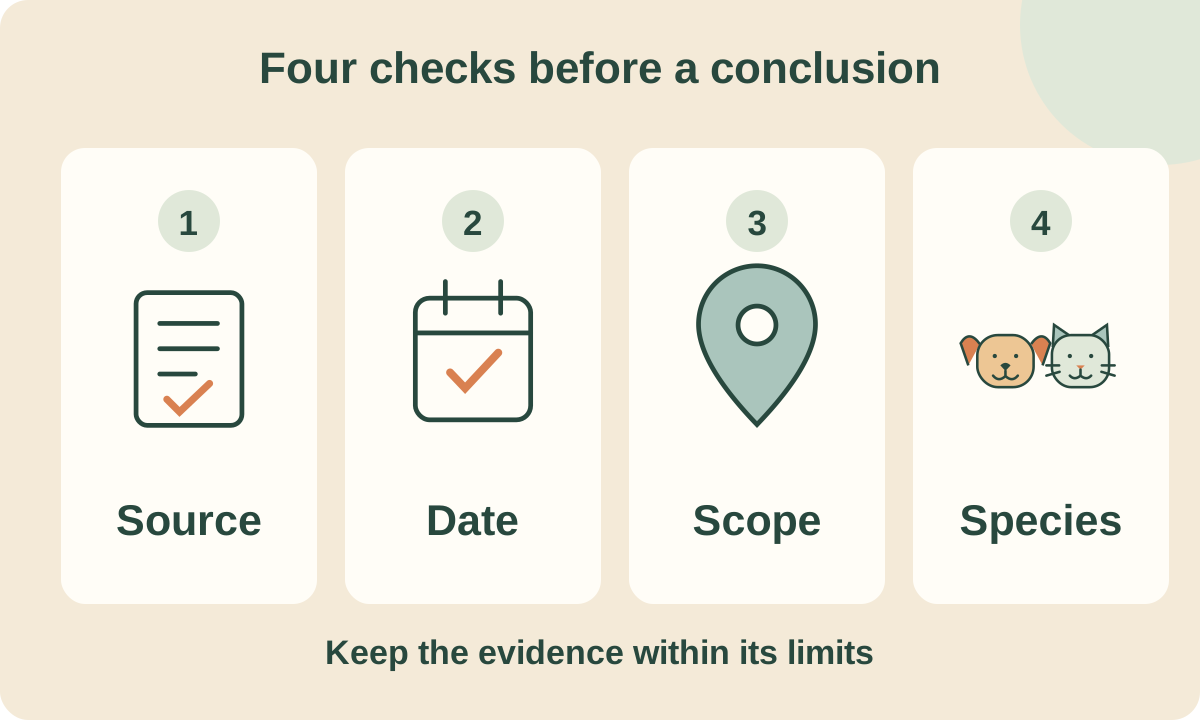
Link the original report and include its date, place and source identity. Discuss animal welfare respectfully; do not identify private individuals, publish personal details or treat rumours as evidence. For an ordinary city outing, use our travel restrictions guide.
Sources & verification
Government sources, news reports and animal-welfare organisation records reviewed 2026-10-11. These are our summaries, not accounts of personal visits. We have not audited every business or automatically rechecked these sites.
- 2015 · official geography: Yanbian and Yanji
- 2016 · Reuters reporting: Yulin dog-meat trade
- 2025 · Humane World/Vshine NGO survey: methods and answers
- 2026 · Humane World NGO program: one facility closes
- 2014 · CCTV reporting: historical Yanji dog-meat dish
- 2021 · Xinhua reporting, republished by Yanji News
- 2018 · Vietnam government reporting: Hanoi management policy
- 2026 · Viet Nam News: Hanoi pilot results
- 2026 · municipal veterinary agency: Ho Chi Minh City cooperation
- 2026 · AP reporting: cat-theft investigation, October 6
- 2021 · FOUR PAWS NGO partner: Hoi An agreement
- 2023 · Vietnam government reporting: voluntary change in Hoi An
- 2026 · Shenzhen market regulator: local dog-meat restriction
- 2024 · Korean statute: dog-meat industry and commencement
- 2026 · Korean agriculture ministry: February 2027 start date
- 2026 · WHO health guidance: rabies prevention and exposure
- Undated · WHO public FAQ: contact and cooked meat; checked 2026
Found a correction or a more recent report? Send the page and a dated source.
A little more PetDoing
Keep exploring
Read another pet guide or take a break with a free game. Community features are currently paused.